_20250520094550.png)

_20250519111520.png)
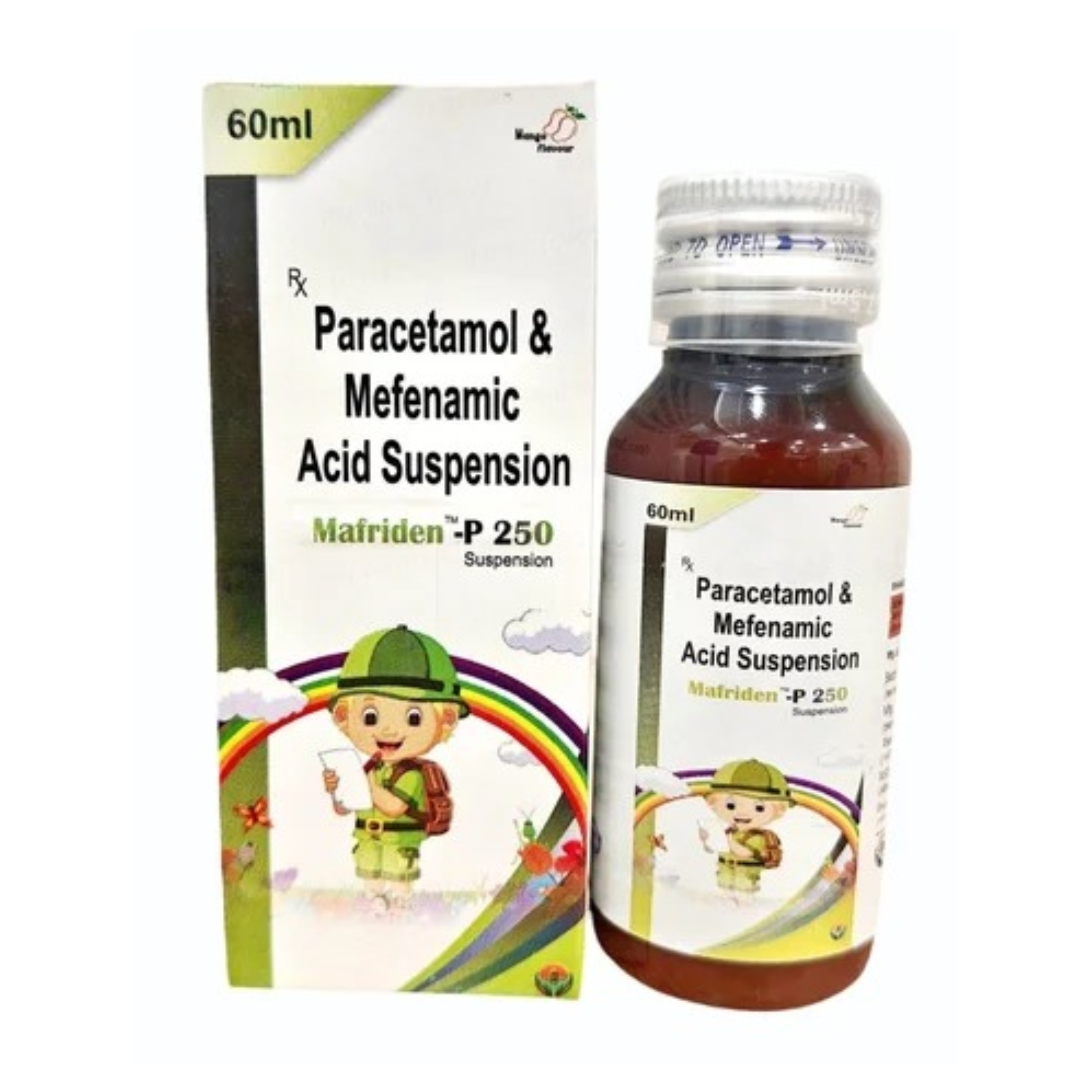

Fever Relief:
Pain Relief:
Inflammatory Conditions:
✓ Dual Action Formula: Combines fever reduction with pain relief and anti-inflammatory action
✓ Fast Relief: Starts working within 30 minutes to bring down fever and ease pain
✓ Child-Friendly: Specially formulated for children with pleasant taste
✓ Effective Fever Control: Quickly reduces high temperature to normal range
✓ Comprehensive Pain Management: Works on multiple types of childhood pain
✓ Anti-Inflammatory: Reduces swelling and inflammation
✓ Easy to Administer: Liquid form makes dosing accurate and swallowing easy
✓ Trusted Ingredients: Contains well-established, safe components
✓ Convenient Packaging: 60ml bottle perfect for complete treatment course
✓ Gentle Formula: Less likely to upset sensitive young stomachs when taken with food
⚠️ IMPORTANT: Always follow your doctor's prescription. Use doses based on your child's weight for best results.
| Age | Dose | Times Daily | Maximum Daily Dose |
|---|---|---|---|
| 6 months - 1 year | 2.5ml (½ teaspoon) | 3 times | 7.5ml |
| 1-3 years | 5ml (1 teaspoon) | 3 times | 15ml |
| 3-6 years | 5-7.5ml | 3 times | 22.5ml |
| 6-12 years | 7.5-10ml | 3 times | 30ml |
| Child's Weight | Single Dose | Times Daily |
|---|---|---|
| 7-10 kg | 2.5ml | 3 times |
| 10-15 kg | 3.75-5ml | 3 times |
| 15-20 kg | 5-7.5ml | 3 times |
| 20-30 kg | 7.5-10ml | 3 times |
| Above 30 kg | 10ml | 3 times |
Dosing Interval: Wait at least 6-8 hours between doses
STEP 1: SHAKE WELL
STEP 2: MEASURE ACCURATELY
STEP 3: BEST TIME TO GIVE
STEP 4: ADMINISTRATION
STEP 5: RINSE & STORE
✓ For Fever: Usually 2-3 days ✓ For Pain: Usually 3-5 days ✓ Maximum: Do not give for more than 7 days without doctor's advice
When to See Doctor:
✅ Shake bottle well before every use ✅ Give after food to prevent stomach upset ✅ Use provided measuring cup only ✅ Maintain 6-8 hours gap between doses ✅ Never exceed maximum daily dose ✅ Keep a dosing diary/chart ✅ Ensure your child drinks plenty of fluids
❌ Don't give more than recommended ❌ Don't give more frequently than advised ❌ Don't use if your child is allergic to ingredients ❌ Don't combine with other paracetamol medicines ❌ Don't give on empty stomach if possible
Understanding Mafriden-P 250 Dosing: This medicine is usually given "when needed" for pain or fever, not on a fixed schedule. Therefore, missing a dose is generally not a problem.
Fever or Pain Still Present:
Example: Last dose at 8 AM, you forgot 2 PM dose. If child has fever at 4 PM and seems uncomfortable, you can give the dose then (8 hours gap maintained).
Fever or Pain Has Gone:
⚠️ NEVER:
✅ ALWAYS:
Set Up Reminders:
Communication:
Not hidden away where it's forgotten
Designate one primary person to track
PARACETAMOL (250mg) - The Fever Fighter:
Paracetamol works in your child's brain to:
MEFENAMIC ACID (100mg) - The Pain & Inflammation Specialist:
Mefenamic Acid provides targeted relief by:
When used together, these two medicines create a powerful team:
Simple Explanation for Parents: Think of it this way - Paracetamol quickly turns down your child's "pain and fever alarm" in the brain, while Mefenamic Acid tackles the actual problem causing the pain at its source. Together, they provide complete comfort for your little one.
Temperature & Location: ✓ Store at room temperature below 25°C (77°F) ✓ Keep in a cool, dry place ✓ Avoid refrigeration (makes syrup too thick) ✓ Keep away from direct sunlight and heat sources ✓ Do not store in bathroom (moisture affects medicine) ✓ Do not store in car (temperature fluctuations)
Container Care: ✓ Keep in original bottle only ✓ Tightly close cap after every use ✓ Use child-resistant cap properly ✓ Wipe bottle neck clean before closing ✓ Do not transfer to other containers
Safety Storage: ✓ Keep out of reach and sight of children ✓ Store in high cabinet with child lock ✓ Never leave on counter or bedside table ✓ Children attracted to sweet-tasting medicine ✓ Store away from pet access
Before Opening:
After Opening:
Signs Medicine Has Gone Bad: ❌ Color has changed significantly ❌ Unusual smell ❌ Particles that don't mix after shaking ❌ Thick, lumpy, or separated permanently ❌ Mold or cloudiness ❌ Beyond expiry date
If you notice any of these, do not use - dispose safely and get new bottle.
How to Dispose of Unused/Expired Medicine:
Do Not:
Do:
Taking Medicine on Trip: ✓ Keep in original bottle with label ✓ Carry in hand luggage (not checked baggage) ✓ Bring prescription or doctor's letter ✓ Use insulated bag if traveling to hot area ✓ Protect from extreme heat in car ✓ Keep measuring cup with bottle
📋 Daily:
📋 Weekly:
📋 Monthly:
If Child Goes to Grandparents/Daycare:
Most children tolerate Mafriden-P 250 well when given as directed. However, some may experience side effects. Most are mild and temporary.
Digestive System:
General:
What to Do:
Seek Immediate Medical Help If Your Child Has:
Severe Allergic Reaction (Anaphylaxis): 🚨 Emergency Signs:
Stomach Problems: 🚨 Contact Doctor Immediately:
Liver Problems: 🚨 Warning Signs:
Other Serious Signs:
📞 Call Emergency Services or Rush to Hospital Immediately if you see these signs
For Stomach Upset:
For Drowsiness:
For Diarrhea:
For Nausea:
📞 Contact doctor if:
✅ Always give after food ✅ Use correct dose for child's weight ✅ Don't exceed maximum daily dose ✅ Keep child well hydrated ✅ Don't give on empty stomach ✅ Don't combine with other paracetamol products ✅ Follow doctor's instructions exactly
If your child experiences any side effects:
Remember: Most children take this medicine without problems. Serious side effects are rare when used correctly.
Overdose means your child has taken more medicine than recommended. This is a serious medical emergency that requires immediate action.
Early Signs (First Few Hours):
Later Signs (12-48 Hours) - VERY SERIOUS: ⚠️ These indicate serious liver damage:
Critical Signs - Life Threatening: 🚨 Seizures or fits 🚨 Difficulty breathing 🚨 Loss of consciousness 🚨 No urine output
STEP 1: CALL EMERGENCY SERVICES
STEP 2: PROVIDE INFORMATION Be ready to tell medical team:
STEP 3: WHILE WAITING FOR HELP ✅ Do:
❌ Do NOT:
Doctors may:
CRITICAL: Paracetamol overdose treatment works best within 8-10 hours. Time is crucial - don't delay getting help.
Even if your child seems fine, get medical help immediately if overdose suspected.
Keep Medicine Safe: 🔒 Store in locked, high cabinet 🔒 Never leave on counter or bedside table 🔒 Close cap tightly immediately after use 🔒 Return to safe spot right away 🔒 Keep out of sight of children
Accurate Dosing: ✅ Always use measuring cup provided ✅ Never guess amounts ✅ Double-check dose before giving ✅ Read label carefully each time ✅ Use weight-based dosing when possible
Communication Between Caregivers: ✅ Keep written record of each dose ✅ Time dose was given ✅ Amount given ✅ Who gave it ✅ Share information with all caregivers ✅ Check chart before giving medicine
Avoid Double Dosing: ✅ Check all medicines for paracetamol ✅ Many cold, flu, and cough medicines contain paracetamol ✅ Don't give multiple paracetamol products ✅ Read all medicine labels
Teach Older Children:
❌ Using kitchen spoon instead of measuring cup ❌ Filling measuring cup above line ❌ Giving ml when teaspoon was meant (or vice versa) ❌ Not waiting full 6 hours between doses ❌ Repeating dose because child vomited (check timing first) ❌ Giving "extra" for very high fever ❌ Keeping medicine at bedside for night doses
Keep These Numbers Easily Accessible:
💡 TIP: Save these in your phone and keep written copy on refrigerator
⚠️ Overdose is a medical emergency ⚠️ Act immediately - don't wait for symptoms ⚠️ Call emergency services first ⚠️ Bring medicine bottle to hospital ⚠️ Prevention is best - store safely and dose carefully
Absolute Contraindications (Never Use):
❌ Your child is allergic to paracetamol, mefenamic acid, or any ingredient
❌ Your child is under 6 months old (unless specifically directed by doctor)
❌ Your child has stomach ulcers or history of stomach bleeding
❌ Your child has severe liver disease
❌ Your child has severe kidney disease
❌ Your child has bleeding disorders (like hemophilia)
❌ Your child has inflammatory bowel disease (Crohn's disease, ulcerative colitis)
❌ Your child is allergic to aspirin or other pain medicines (may be cross-allergic)
❌ Your child has had severe allergic reaction to this medicine before
Medical Conditions Requiring Caution:
⚠️ Asthma or breathing problems
⚠️ Liver problems or jaundice
⚠️ Kidney problems
⚠️ Heart problems
⚠️ Blood disorders
⚠️ G6PD deficiency
⚠️ Dehydration
⚠️ Chickenpox or flu
⚠️ Recent surgery or injury
Recent Illnesses:
Other Medications: Tell your doctor if your child is taking:
Vaccinations: ✓ Can be given after vaccinations for fever/discomfort ✓ Wait to see if fever develops - don't give preventively ✓ Follow your pediatrician's specific advice
During Illness: ✓ Ensure child is drinking enough fluids ✓ Monitor fever regularly with thermometer ✓ Watch for dehydration signs ✓ Seek medical help if child seems very unwell
Chickenpox: ⚠️ Some doctors prefer to avoid during active chickenpox ⚠️ Consult your pediatrician for guidance ⚠️ Paracetamol alone may be preferred
Dengue or Bleeding Disorders: ❌ Avoid NSAIDs - can increase bleeding risk ❌ Use paracetamol alone instead ❌ Seek immediate medical attention
Stop Giving and Get Emergency Help If: 🚨 Difficulty breathing 🚨 Swelling of face, lips, tongue 🚨 Severe rash or hives 🚨 Wheezing 🚨 Severe itching
These are signs of serious allergic reaction
Food & Drinks: ✓ Always give after meals or snacks - reduces stomach upset ✓ Can give with milk or light food ✓ Encourage plenty of water - keeps child hydrated ✓ Continue normal diet unless child has no appetite ✓ Avoid giving on empty stomach
Rest: ✓ Let child rest - medicine may cause drowsiness ✓ Avoid strenuous play for few hours after medicine ✓ Drowsiness helps child sleep comfortably ✓ Normal activities can resume as child feels better
Monitoring: ✓ Check temperature regularly with thermometer ✓ Keep track of doses given (write down time and amount) ✓ Watch for side effects ✓ Note when fever/pain improves
Tell Your Doctor If Child Is Taking:
Seek Doctor's Advice If:
Consult Your Pediatrician If: ✓ Fever persists more than 3 days ✓ Fever is above 103°F (39.4°C) ✓ Infant under 3 months has any fever ✓ Child has febrile seizures (fits with fever) ✓ Pain doesn't improve in 5 days ✓ Symptoms worsen despite medicine ✓ Child refuses to eat or drink ✓ Signs of dehydration ✓ Unusual drowsiness or lethargy ✓ Persistent vomiting or diarrhea ✓ Rash develops along with fever ✓ Difficulty breathing ✓ Stiff neck ✓ Severe headache ✓ Any symptom that worries you
Trust your parental instinct - if something doesn't feel right, seek medical attention.